Blog & News
A Complete Guide to Solar Inverter Types: Micro & Hybrid
A Complete Guide to Solar Inverter Types: Micro & Hybrid
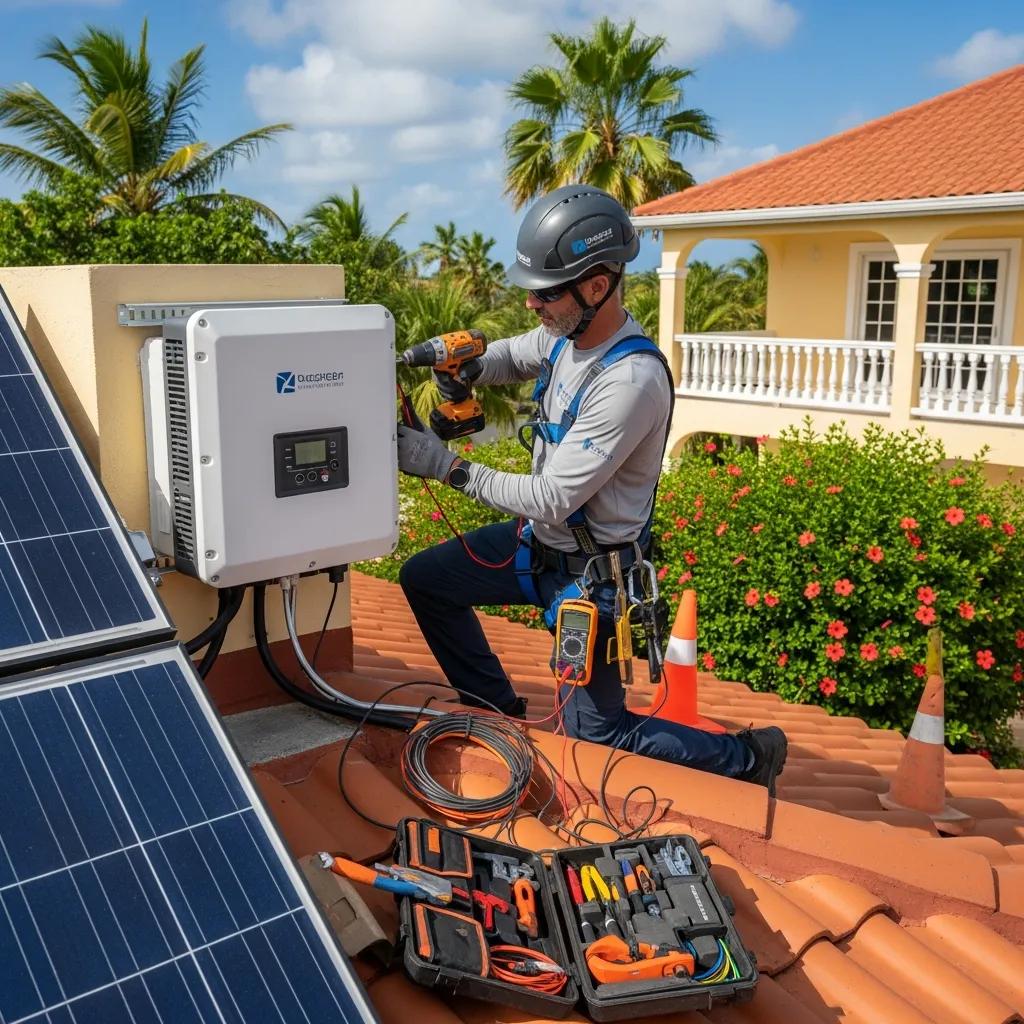
Guide to Solar Inverter Types: Comparing String, Microinverters & Hybrid for Caribbean Homes
Understanding the various types of solar inverters is crucial for homeowners looking to harness solar energy effectively. This guide delves into the differences between string inverters, microinverters, and hybrid inverters, providing insights into their functionalities, advantages, and disadvantages. As solar energy solutions become increasingly popular in the Caribbean, selecting the right inverter can significantly impact the efficiency and performance of solar panel installations. Homeowners often face challenges in choosing the best inverter type that suits their specific needs, especially in tropical climates. This article will explore the key differences between inverter types, how they work, their pros and cons, and the factors influencing installation costs.
What Are the Key Differences Between String, Microinverters, and Hybrid Inverters?
String inverters, microinverters, and hybrid inverters represent three distinct approaches to converting solar energy into usable electricity. String inverters are the most common type, connecting multiple solar panels in a series, which can be cost-effective for larger installations. Microinverters, on the other hand, are installed on each individual panel, allowing for optimized performance and monitoring at the module level. Hybrid inverters combine the functionalities of both string and microinverters, enabling integration with battery storage systems for enhanced energy management. Understanding these differences is essential for homeowners to make informed decisions about their solar energy systems.
How Does Each Inverter Type Work in Solar Panel Systems?
Each inverter type operates differently within solar panel systems, affecting overall efficiency and performance.
String inverters convert the direct current (DC) generated by a series of solar panels into alternating current (AC) for home use. This centralized approach simplifies installation and reduces costs but can lead to energy losses if one panel is shaded or underperforming.
Microinverters work independently on each solar panel, converting DC to AC at the module level. This allows for better energy harvest, especially in partially shaded conditions, as each panel can operate at its maximum potential.
Hybrid inverters serve as a bridge between solar panels and battery storage systems. They can manage energy flow from solar panels to the home, battery storage, and the grid, providing flexibility and energy independence.
What Are the Advantages and Disadvantages of Each Inverter Type?
Understanding the pros and cons of each inverter type can help homeowners choose the best option for their needs.
Advantages and Disadvantages of String Inverters
String inverters offer several advantages:
- Cost-Effective: Generally lower initial costs compared to microinverters.
- Simplicity: Fewer components make installation straightforward.
- Proven Technology: Widely used and reliable with a long track record.
However, they also have disadvantages:
- Performance Issues: If one panel is shaded or malfunctioning, it can affect the entire string’s output.
- Limited Monitoring: Less granular performance data compared to microinverters.
Considering the impact of shading, studies provide valuable insights into selecting the most suitable inverter type for specific rooftop PV systems to achieve the lowest long-term costs.
Inverter Selection for Rooftop PV Systems & Shading
Results presented in this work give insights into the selection of the inverters for different shading scenarios in a specific rooftop PV system aiming with the lowest LCOE.
Analysis on inverter selection for domestic rooftop solar photovoltaic system deployment, H Ali, 2020
Advantages and Disadvantages of Microinverters
Microinverters provide unique benefits:
- Optimized Performance: Each panel operates independently, maximizing energy production.
- Enhanced Monitoring: Homeowners can track the performance of each panel individually.
- Better for Shaded Areas: Ideal for installations with shading issues.
On the downside:
- Higher Costs: Generally more expensive than string inverters.
- Complex Installation: More components can complicate the installation process.
Advantages and Disadvantages of Hybrid Inverters
Hybrid inverters combine the best of both worlds:
- Energy Storage Integration: Seamlessly connect with battery systems for energy independence.
- Flexible Energy Management: Can optimize energy use between solar, battery, and grid.
- Future-Proofing: Suitable for evolving energy needs as storage technology advances.
However, they may have drawbacks:
- Higher Initial Investment: Typically more expensive than both string and microinverters.
- Complexity: Installation and setup can be more complicated.
How Do Solar Inverter Types Affect Efficiency and Performance in Caribbean Climates?
The efficiency and performance of solar inverters can vary significantly based on the climate, particularly in the Caribbean, where sunlight is abundant but weather conditions can be unpredictable.
Indeed, understanding and quantifying inverter efficiency under specific tropical climatic conditions is a critical area of study for optimizing solar energy systems.
Solar Inverter Efficiency in Tropical Climates
efficiency of inverters for tropical climatic conditions in Chennai, India. A formulation of the weighted average inverter efficiency for tropical climatic conditions is presented, which can be used to quantify the performance of inverters in such environments.
Quantification of solar inverter efficiency for Indian tropical climatic conditions, 2014
String inverters may struggle with efficiency if panels are shaded by trees or buildings, as the entire string’s output can be compromised. In contrast, microinverters excel in these conditions, allowing each panel to perform optimally regardless of shading.
Research further supports the superior performance of microinverters in variable tropical conditions, particularly when dealing with partial shading.
Microinverter vs. Central Inverter Performance in Tropical Climates
Photovoltaic systems are crucial for renewable energy, and comparing microinverters and central inverters helps optimize their performance and cost. The results showed that the system with microinverters demonstrated an advantage in energy efficiency, especially in conditions of solar irradiance variability, such as on days with partial shading or panel imbalance, as each panel operates independently. While microinverters are ideal for locations with variable irradiance conditions or small spaces, central inverters can be a more economical and efficient solution for large installations with fewer irradiance discrepancies. This study provides valuable information for making informed decisions about which photovoltaic system to use based on local conditions and project goals in Honduras.
Evaluating the Effectiveness of Photovoltaic Systems: A Comparison of Microinverters and Conventional Non-Optimized Solutions, M Parada, 2025
Hybrid inverters provide the added benefit of energy storage, enabling homeowners to store excess energy generated during sunny days for use during cloudy periods or at night. This capability is particularly advantageous in regions with fluctuating weather patterns.
Why Is String Inverter Efficiency Important for Large Solar Arrays?
String inverter efficiency is crucial for large solar arrays, as it directly impacts the overall energy output and financial returns. High-efficiency string inverters can maximize energy production, leading to better financial returns on investment.
When selecting string inverters, homeowners should consider efficiency ratings, as higher-rated inverters can significantly enhance energy output, especially in large installations where every kilowatt-hour counts.
How Do Microinverters Optimize Module-Level Power in Tropical Conditions?
Microinverters optimize module-level power by allowing each solar panel to operate independently. This is particularly beneficial in tropical conditions where shading from trees or buildings can vary throughout the day.
By monitoring each panel’s performance, microinverters can adjust to changing conditions, ensuring that energy production remains high even when some panels are less effective. This capability makes microinverters an excellent choice for homeowners in the Caribbean, where environmental factors can impact solar energy generation.
What Are the Benefits of Hybrid Inverters for Solar Battery Storage Integration?
Hybrid inverters offer significant benefits for solar battery storage integration, making them an attractive option for homeowners looking to enhance their energy independence.
- Energy Independence: Hybrid inverters allow homeowners to store excess solar energy for use during peak demand or outages.
- Seamless Integration: They can easily connect with battery systems, providing a comprehensive energy management solution.
- Cost Savings: By utilizing stored energy, homeowners can reduce reliance on the grid, leading to potential savings on electricity bills.
How Do Hybrid Inverters Enhance Smart Energy Management?
Hybrid inverters enhance smart energy management by providing real-time monitoring and control over energy usage. Homeowners can track their energy consumption, solar production, and battery status through user-friendly interfaces.
This capability allows for better decision-making regarding energy use, enabling homeowners to optimize their energy consumption patterns and reduce costs. Additionally, hybrid inverters can automatically manage energy flow between solar panels, batteries, and the grid, ensuring that homeowners always use the most cost-effective energy source available.
What Makes Hybrid Inverters Suitable for Growing Solar Storage Needs?
As solar storage needs grow, hybrid inverters become increasingly suitable due to their flexibility and adaptability. They can easily integrate with new battery technologies, allowing homeowners to upgrade their systems as advancements occur.
Hybrid inverters also support various energy management strategies, enabling homeowners to adjust their energy usage based on changing needs and preferences. This adaptability makes them an ideal choice for those looking to future-proof their solar energy systems.
How Much Does Solar Inverter Installation Cost and What Should Caribbean Homeowners Expect?
The cost of solar inverter installation can vary widely based on several factors, including the type of inverter chosen, the size of the solar array, and local labor rates. Homeowners should expect to invest in quality equipment and professional installation to ensure optimal performance.
On average, installation costs for string inverters can range from $1,000 to $3,000, while microinverters may cost between $2,000 and $4,000. Hybrid inverters typically fall within the $3,000 to $5,000 range, reflecting their advanced capabilities and integration with battery systems.
What Factors Influence Installation Costs for Different Inverter Types?
Several factors can influence the installation costs of different inverter types, including:
- Type of Inverter: Microinverters and hybrid inverters generally have higher upfront costs compared to string inverters.
- Quality of Components: Higher-quality inverters may come with a premium price but can offer better performance and longevity.
- Installation Complexity: The complexity of the installation process can affect labor costs, with more intricate setups requiring more time and expertise.
What Are Best Practices for Installing and Maintaining Solar Inverters?
To ensure optimal performance and longevity of solar inverters, homeowners should follow best practices for installation and maintenance:
- Professional Installation: Always hire qualified professionals for installation to ensure compliance with local regulations and optimal system performance.
- Regular Maintenance: Schedule routine inspections and maintenance to identify and address potential issues before they escalate.
- Monitoring System Performance: Utilize monitoring tools to track inverter performance and energy production, allowing for timely interventions if problems arise.
By adhering to these best practices, homeowners can maximize the benefits of their solar energy systems and ensure long-term efficiency and reliability.